Work / Use Cases
Proof projects and workflow systems
Explore how Doxa Studio designs human-reviewed AI workflow systems for sensitive intake, documentation, review, follow-up, and reporting.
Our work focuses on practical systems that help teams organize information, reduce manual admin work, prepare staff-reviewed summaries, and keep human responsibility at the center.
Featured proof projects
These projects show how Doxa Studio approaches real workflow problems: collecting information, organizing records, supporting review, preparing documentation, tracking follow-up, and keeping sensitive work human-reviewed.
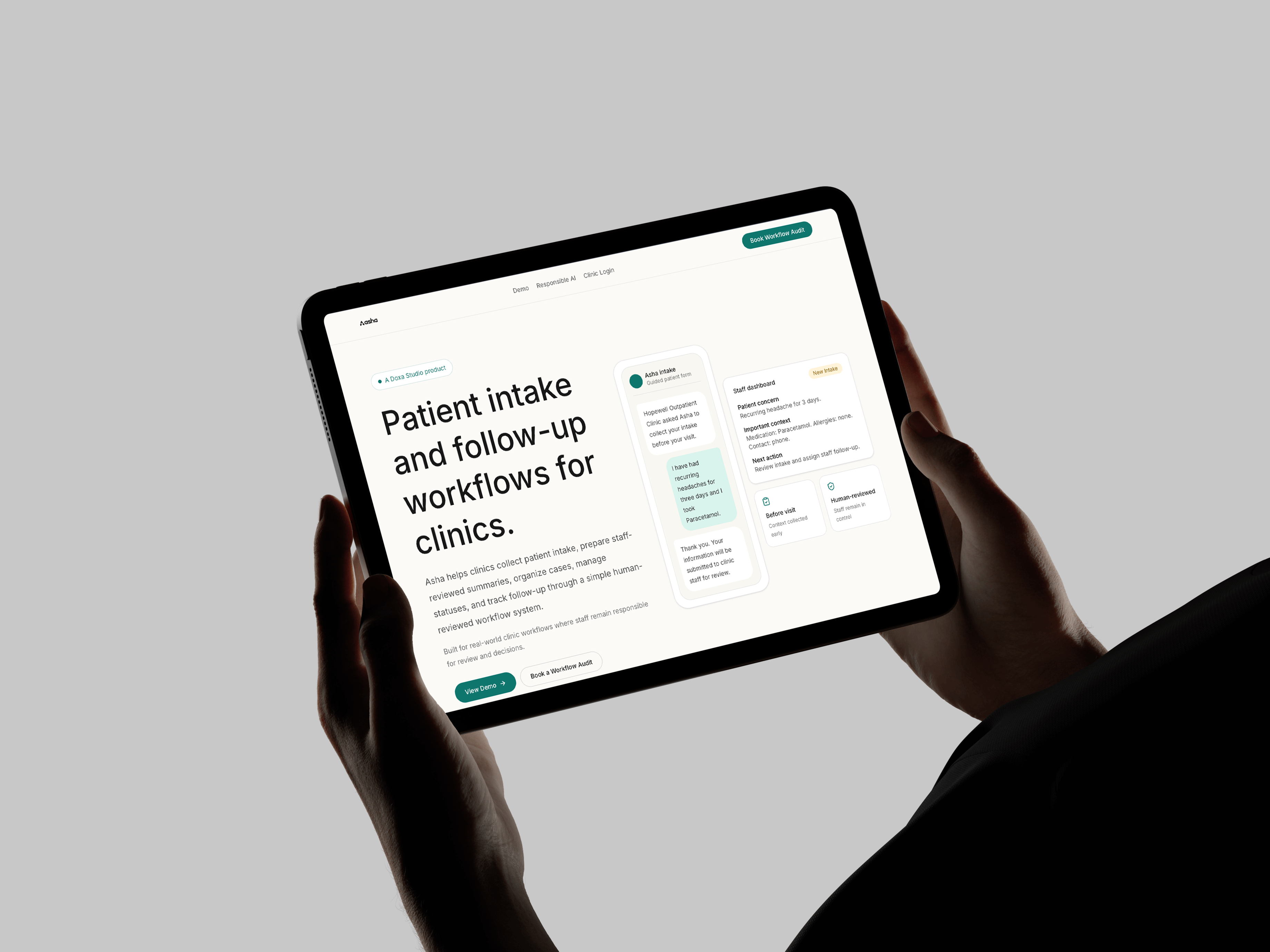
Asha: Care Workflow System
Asha began as a base patient intake and follow-up workflow concept, then was adapted and improved for a private client workflow.
The full workflow, client identity, and internal process are not shown publicly because the system involved sensitive operational details.
What it demonstrates
- Intake form
- Staff dashboard
- Case status tracking
- AI-assisted staff summary
- Follow-up workflow
- Internal notes
- Simple reporting structure
Best fit: Care-based teams that need to organize intake, follow-up, internal notes, and staff-reviewed summaries.
View Asha Overview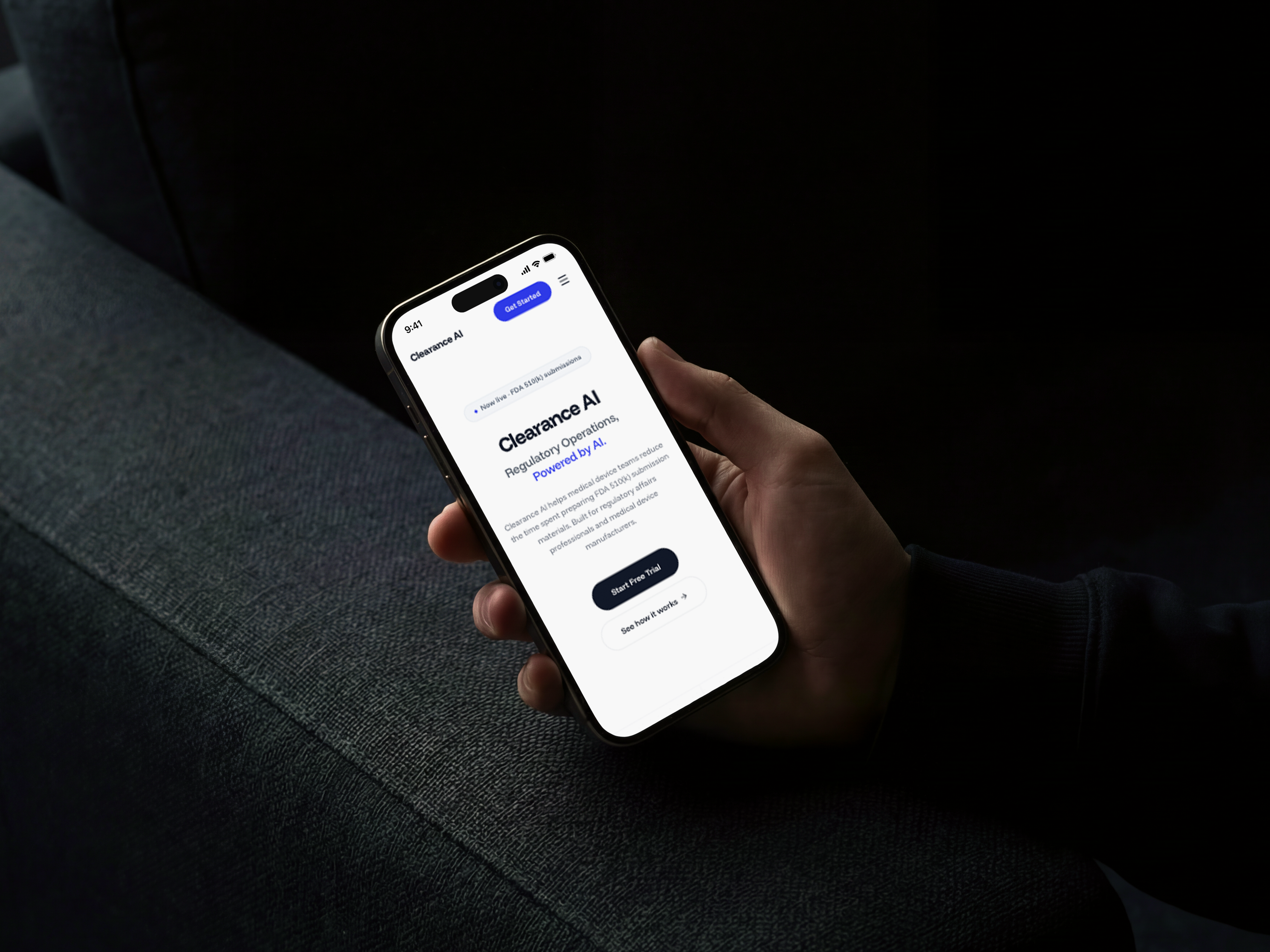
Clearance AI: AI Regulatory Submission Workflow Platform
Clearance AI is a confidential AI-powered workflow platform designed to support FDA 510(k) regulatory submission preparation for medical device teams.
The full workflow and implementation details are not shown publicly because of client confidentiality.
What it demonstrates
- Guided device classification workflow
- Predicate device search and comparison
- Standards and evidence gap analysis
- AI-assisted submission drafting
- Source-grounded document generation
- Human review boundaries
- Audit trail and review history
- Compliance-aware workflow design
Best fit: Health-tech and regulated teams that need structured documentation, evidence review, and human-reviewed AI support.
View Clearance AI OverviewPublic overview
Asha: Client-adapted care workflow system
Asha began as a base patient intake and follow-up workflow concept, then was adapted and improved for a private client workflow. The full workflow, client identity, and internal process are not shown publicly because the system involved sensitive operational details.
This public overview shows the general workflow pattern without exposing confidential client information.
The workflow problem
Care-based teams often collect important information through forms, messages, calls, spreadsheets, and staff notes that do not connect. This makes it harder to see who needs review, who needs follow-up, and what information matters most.
- Scattered intake information
- Unclear case status
- Missed follow-up
- Repetitive staff writing
- Messy internal notes
- Manual reporting
- Poor team visibility
What the system demonstrates
- Intake form
- Staff dashboard
- Case status tracking
- AI-assisted staff summary
- Follow-up workflow
- Internal notes
- Simple reporting structure
Confidentiality and safety
This public example does not show the full client workflow, client data, real users, or private operational details. It is shared only as a safe overview of the type of system Doxa Studio can build and adapt for care-based teams.
AI-assisted outputs are designed for staff review. The system does not diagnose, treat, prescribe, or replace healthcare professionals.
Confidential project
Clearance AI: AI regulatory submission workflow platform
Clearance AI is a confidential AI-powered workflow platform designed to support FDA 510(k) regulatory submission preparation for medical device teams.
The full workflow and implementation details are not shown publicly because of client confidentiality. This public overview explains the problem, system concept, and technical direction without exposing private client information.
The core idea
Clearance AI acts as an intelligent copilot for regulatory professionals and medical device companies preparing FDA 510(k) submissions. A 510(k) submission is a structured regulatory package used to show that a new medical device is substantially equivalent to a legally marketed predicate device.
The workflow problem
Medical device regulatory teams often spend significant time on repetitive and high-stakes documentation work. This work is detailed, expensive, time-consuming, and difficult to manage through scattered documents, spreadsheets, and manual research.
- Identifying the correct FDA product code
- Searching for suitable predicate devices
- Reviewing applicable standards
- Mapping evidence requirements
- Finding missing documentation
- Drafting structured submission sections
- Maintaining review history and auditability
What the system demonstrates
- Guided device classification workflow
- Predicate device search and comparison
- Standards and evidence gap analysis
- AI-assisted submission drafting
- Source-grounded document generation
- Human review boundaries
- Audit trail and review history
- Compliance-aware workflow design
System modules
- Device profile wizard
- Product code and classification support
- Predicate search workflow
- Evidence gap matrix
- AI-assisted drafting workspace
- Source-linked summaries
- Human review and approval layer
- Audit trail timeline
Technical direction
- Retrieval-Augmented Generation for grounded drafting
- Vector search for semantic document retrieval
- Regulatory knowledge graph concepts
- Human-in-the-loop review
- Auditability and version tracking
- AI-generated draft labeling
- Escalation boundaries for high-stakes outputs
Confidentiality and safety
This public example does not show the full client workflow, internal implementation, private documents, or proprietary process details. It is shared as a safe overview of Doxa Studio's ability to design human-reviewed AI systems for sensitive, regulated, and documentation-heavy workflows.
Clearance AI does not replace regulatory professionals or legal review. It is designed to support research, drafting, organization, and human-reviewed regulatory preparation.
What these projects prove
Asha and Clearance AI show two sides of the same capability: designing structured systems for sensitive work where information must be organized, reviewed, documented, and acted on responsibly.
Sensitive workflow design
We design systems for teams handling information that cannot be treated casually, including care records, operational notes, regulatory documents, and internal review processes.
Human-reviewed AI
AI supports summaries, drafts, search, organization, and workflow guidance, while humans remain responsible for review, decisions, and approvals.
Documentation-heavy workflows
We can design systems that help teams turn complex information into structured summaries, reports, drafts, and review-ready documents.
Confidential client work
We understand that some workflows cannot be shown publicly. Public case overviews can explain the problem and system pattern without exposing sensitive client details.
Systems Doxa Studio can build
Doxa Studio does not build random AI tools. We build human-reviewed workflow systems for teams that handle sensitive information, documentation, follow-up, and reporting.
Intake & Case Workflow Systems
For teams that need to collect information clearly and organize it into usable records.
Example proof project: Asha
Useful for
- Patient intake
- Student support intake
- Client onboarding
- Beneficiary intake
- Member or volunteer intake
Can include
- Custom intake forms
- Required information fields
- Staff notifications
- Organized records
- Case or request status
- Internal notes
Review & Decision Support Workflows
For teams that need to review requests, cases, documents, or submissions before taking action.
Example proof project: Asha and Clearance AI
Useful for
- Staff review
- Approval workflows
- Case review
- Regulatory review
- Internal handoffs
Can include
- Review dashboards
- Assigned staff roles
- Status tracking
- Missing item flags
- Review notes
- Human approval steps
AI-Assisted Documentation Systems
For teams that need to turn complex information into structured summaries, reports, drafts, or documentation.
Example proof project: Clearance AI
Useful for
- Staff summaries
- Case summaries
- Student progress reports
- Regulatory drafts
- Evidence gap summaries
- Internal reports
Can include
- AI-assisted summaries
- Source-linked drafts
- Report templates
- Human review controls
- Version history
- Approval notes
Follow-Up & Reporting Dashboards
For teams that need to track what happens next and prepare clear updates.
Example proof project: Asha
Useful for
- Follow-up tracking
- Progress monitoring
- Management reports
- Parent or client updates
- Program summaries
Can include
- Follow-up statuses
- Staff assignments
- Reporting views
- Progress snapshots
- Communication templates
- Exportable summaries
How a proof project becomes your system
1. Start with a Workflow Audit
We review how your team currently handles intake, review, documentation, follow-up, or reporting.
2. Identify the workflow pattern
We identify whether your team needs an intake system, review workflow, AI-assisted documentation system, reporting dashboard, or a combination.
3. Adapt the system to your team
We design the workflow around your roles, information, responsibilities, review steps, and confidentiality needs.
4. Train, review, and support
Your team receives training and optional monthly support so the system remains useful after launch.
Next step
Want a workflow system built around your team?
Start with a Workflow Audit so we can understand your process, identify the workflow pattern, and recommend a practical system without exposing sensitive work publicly.